I’ve loved looking at the stars for years. Growing up, my mom would take me and my brother camping with our grandparents and we’d sit by the fire and look up, my grandfather always pointing out different constellations and every so often a satellite.
In 2019 I decided I wanted to see what I could capture with just a DSLR camera and a tripod. I was amazed by the number of stars I could capture with the camera that I just couldn’t see with my own eyes. Thus began my journey into Deep Sky Astrophotography, which is the subject of most of my art.
All of my images except one, were captured from my backyard near downtown Hillsboro. The one exception was an image of dark nebula that I captured at L.L. Stubb Stewart State Park, a mere 20 miles from Hillsboro, but which provides much darker skies.
One of the things that I love about this art form is the ability to capture light that has been travelling for hundreds, thousands, and millions (and more) of years. Each of my pieces tells you how far away the object is, and thus how long the light took to travel here. On my image of the Pleiades, if you look just to the left of the brightest star on the center left (Electra), you’ll see a small slash. That is a galaxy that is over 1.4 billion light years away. Additionally, this style of art allows you to see objects in space that are just too dim for human eyes to see. By capturing light over a longer period - one of my pieces took almost 60 hours - you can see these very dim objects. Usually, these objects are emission nebula where interstellar gases have been blasted by ionizing radiation from nearby massive stars causing them to emit light. Fortunately, none of those kinds of stars are near us.
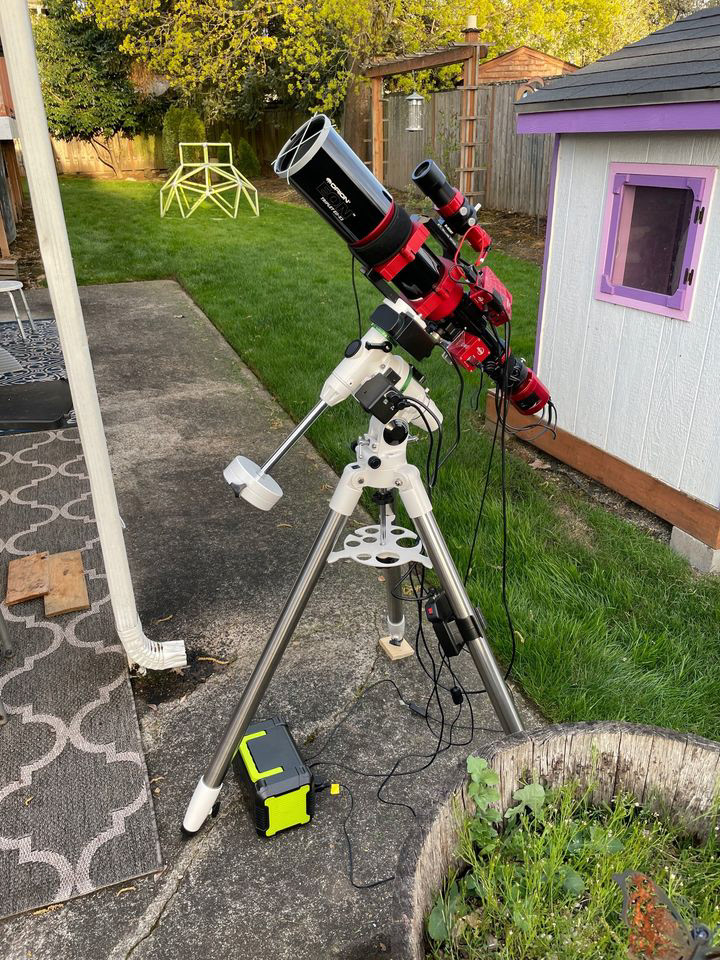
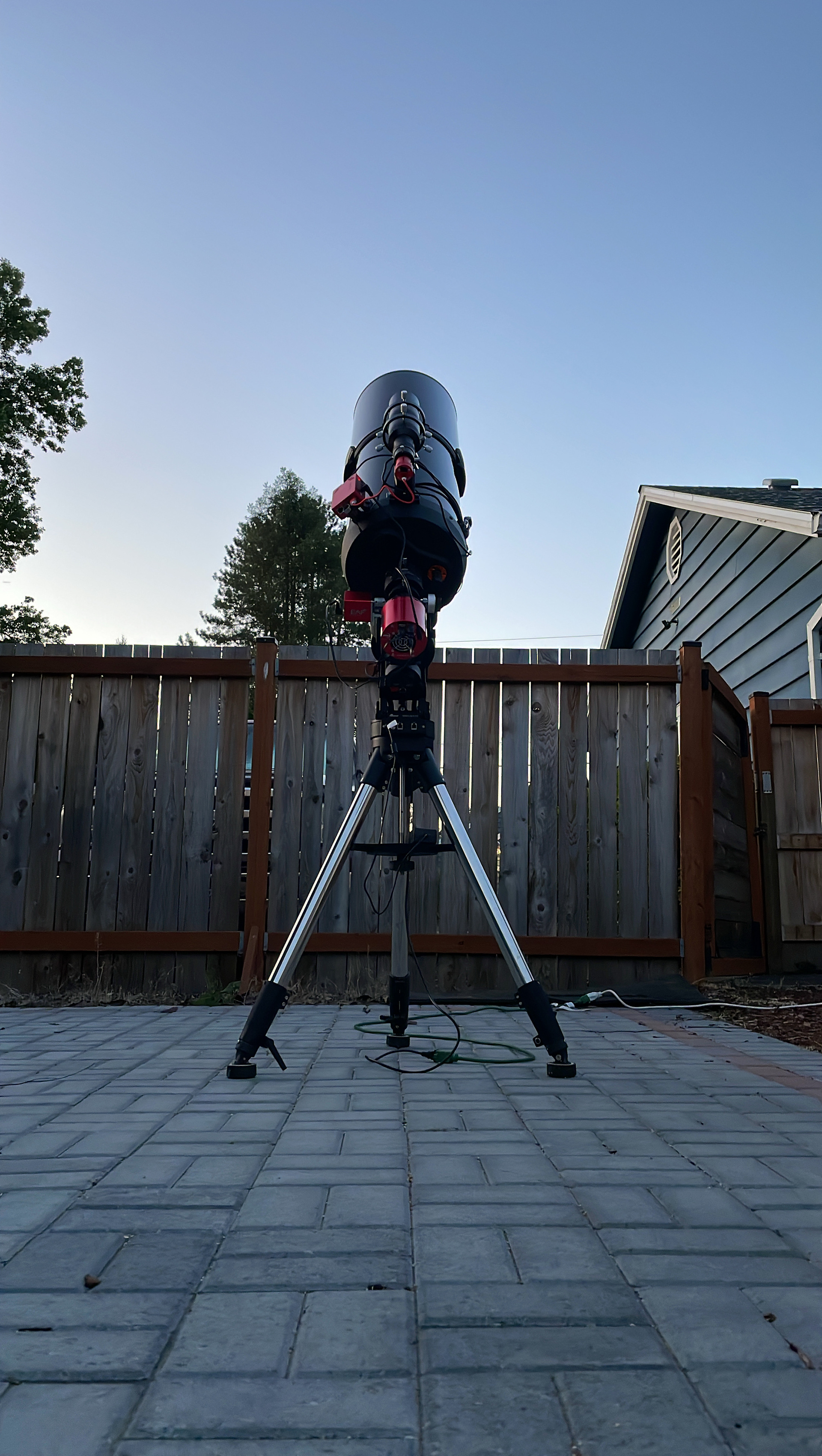
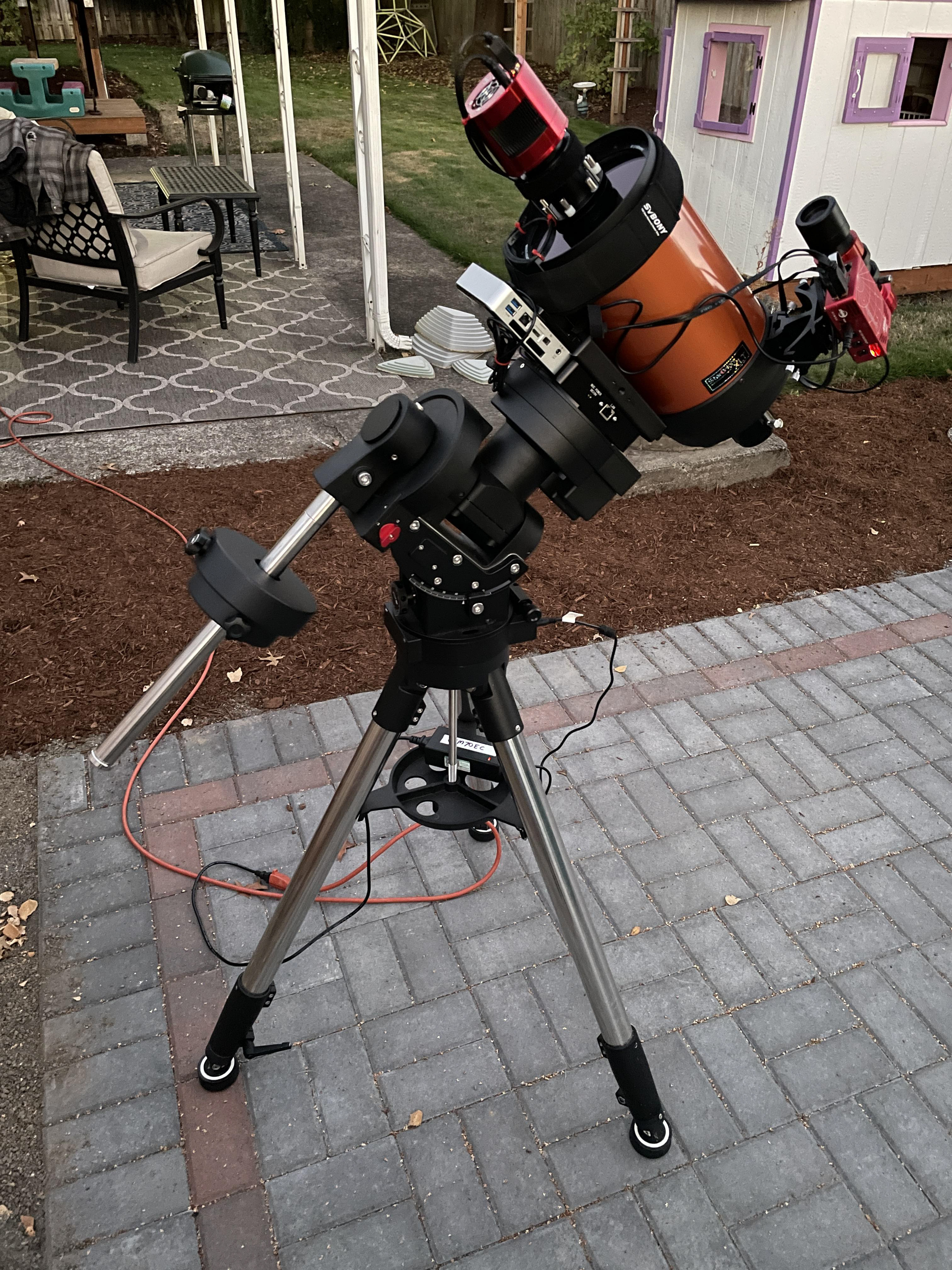
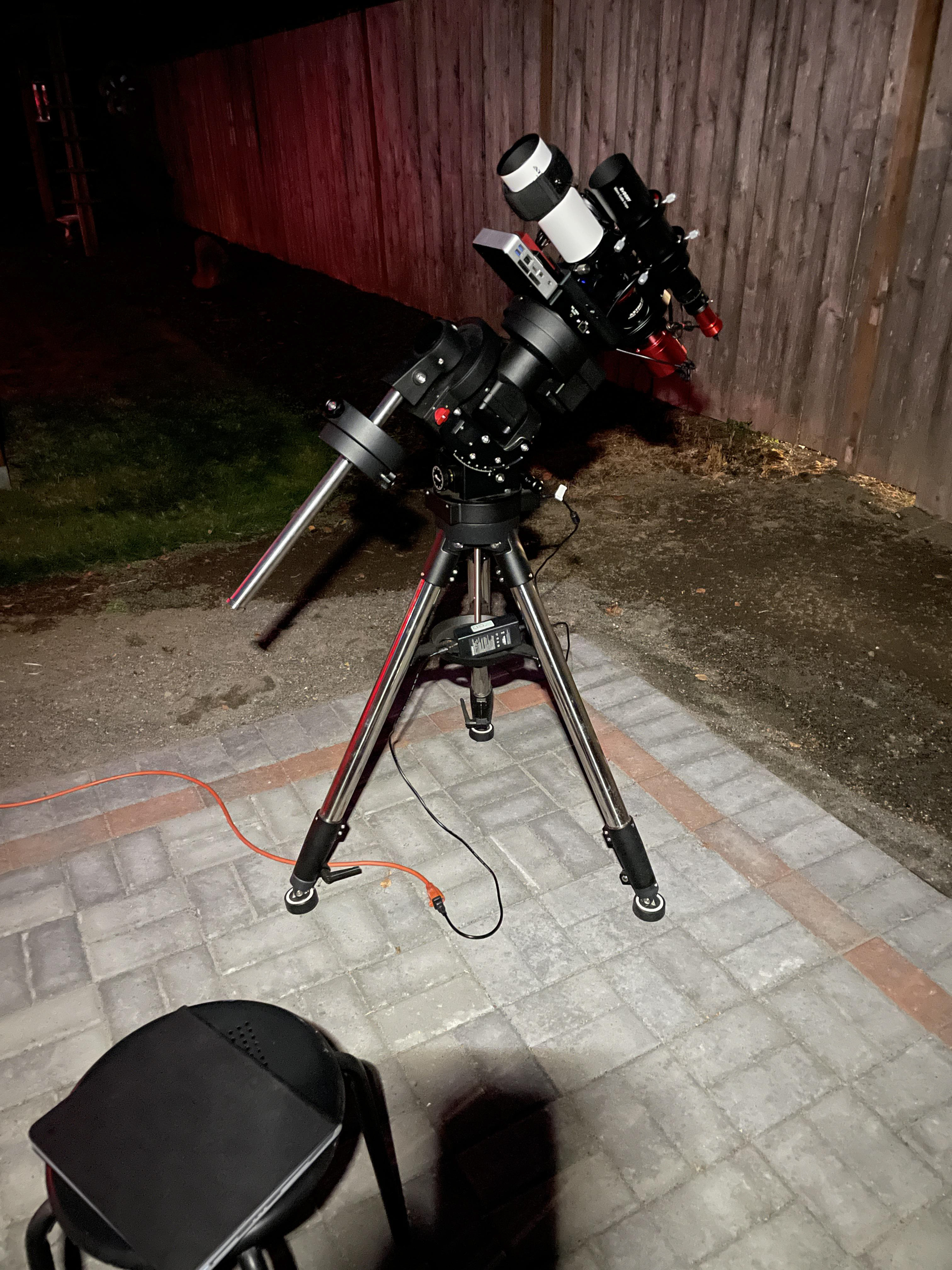
To capture these images, I’ve used a multitude of telescopes over the years, some of which are pictured below. If you’d like to see more of my images, please check out my Instagram or contact me via the link above.